


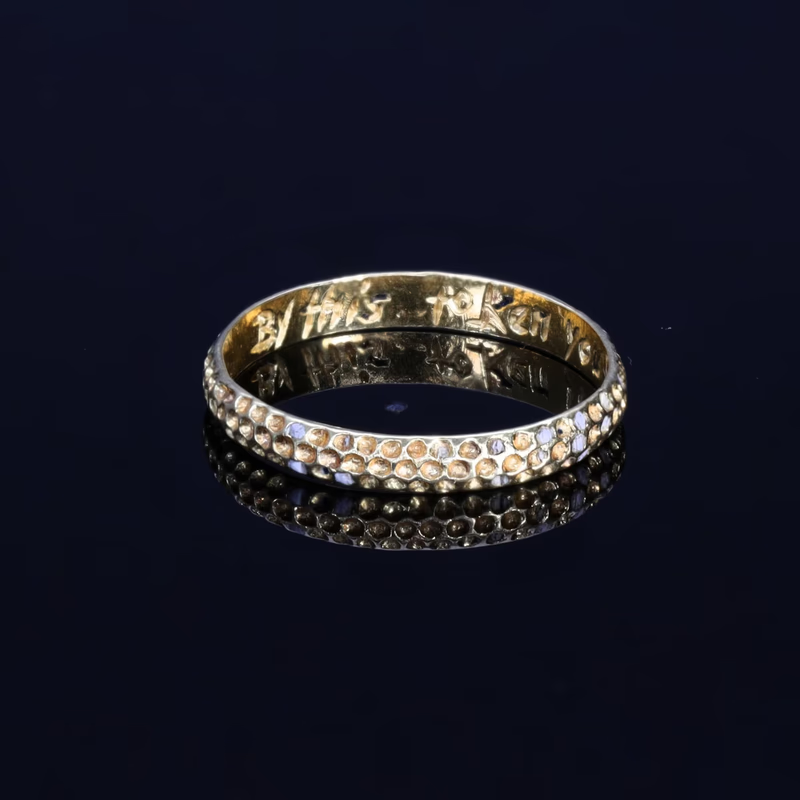
The Antique 18th Century 'By This Token You Are Bespoken' Posy Ring
The Antique 18th Century 'By This Token You Are Bespoken' Posy Ring
Couldn't load pickup availability
In 1730 William Dicey published a book titled "The Best and Compleatest Academy of Compliments yet extant. Being wit and mirth improv'd by the most elegant expressions used in the art of courtship...", one of which was the phrase 'By This Token You Are Bespoken'.
'Posy' is derived from 'poesy' or 'poetry'. In the medieval period many rings bore posy inscriptions in Latin or French, the languages frequently spoken by the affluent elites. Later, inscriptions in English became more usual, although the lack of standardised spelling might surprise a modern reader. The inscription is generally found on the interior of the ring, hidden to everyone except the wearer and most of the sentimental mottoes were taken from the popular literature of the time. In fact, love inscriptions often repeat each other.
In the later 16th century, 'posy' specifically meant a short inscription. A posy is described in contemporary literature as a short 'epigram' of less than one verse. The practice of giving rings engraved with mottoes at betrothals or weddings was common in England from the 16th century onwards, and continued until the late 18th century. Joan Evans assumed that posy rings were principally used by/between lovers and distinguished four contexts for the giving of posy rings by one lover to another: betrothals, weddings, St Valentine's Day and sometimes on occasions of mourning.
There are some remains to the niello fill of the lettering and outer filling. There is some usual wear commensurate with the ring's age to the band. 1.20 grams, 18.10mm overall, 16.44mm internal diameter.
Provenance: Acquired from an established BNTA and AIAA registered ancient art dealer. Formerly from the Albert Ward collection, Essex, UK; acquired on the UK antiques market between 1974-1985.
See Cf. Evans, J., English Posies and Posy Rings, OUP, London, 1931, p.28, for this posie. See the Portable Antiquities Scheme Database, id. LON-AA2432, for a worn ring which appears to have three rows of dimples also, dated 16th-17th century AD.
Share this ring
The Details
- Era
- 17th to 18th century
- Metal
- Tests as Yellow Gold
- Weight
- 1.21g
- Band Width
- 2.42mm - 2.54mm
- Size
- K — US 5¼ · EU 50.0
- Wedding Ring Shape
- D-shape
This item is not included in our Complimentary Resizing service. As an ancient artefact we will not alter it.
Why We Love It
- Stunning engraving to the inner band
- Gorgeous dot detailing
- Links to William Dicey's literature dating to 1730
- Independent Expert Report
Independent Expert Report
This ring includes an independent jewellery assessment report completed by Crystal Clear Valuations (FJVA FIRV FGA DGA FNAJ AJP PJValDip PJGemDip PJDip PJManDip). The certificate is included with your purchase and a scanned copy can be seen in the image gallery above.

The Shape

D-Shape
A D-Shape wedding ring is flat on the inside and rounded on the outside to provide a close, comfortable fit.
Want to know more? See our Wedding Ring Buying Guide.


 The Antique 18th Century 'By This Token You Are Bespoken' Posy Ring

Complimentary Resizing
We offer complimentary ring resizing on the majority of our rings exceeding £250, ensuring your chosen piece is the perfect fit for you.
Wherever you see the Complimentary Resizing selector on a ring, you can choose to have the ring resized at the time of your order, or to have it delivered first with a finger measure so you can check your size and easily send it in for complimentary resizing.
-
Complimentary Next Day Delivery
Learn MoreFor UK orders we ship using Royal Mail Special Delivery, so your ring arrives the day after shipping.
-
30 Day No Quibble Returns
Learn MoreAt Antique Jewellers, customer satisfaction is our top priority. If you're not happy with your ring, you can return it within 30 days for a full refund.
-
Have a question?
Frequently Asked QuestionsIf you've any questions about a piece or anything else, drop us an email to hello@antiquejewellers.com and we'll be happy to help!